
A "fully hydraulic wireline core drilling rig" is a purpose-built drilling machine designed for geological exploration, mineral resource evaluation, and subsurface investigation. Unlike conventional drilling rigs that rely heavily on mechanical power transmission, a fully hydraulic system delivers precise, controllable torque and feed force through hydraulic pumps and cylinders — making it ideal for deep coring operations in hard rock formations.
The core purpose of this rig is simple but critical: retrieve undisturbed rock cores from deep underground so geologists, mining engineers, and hydrologists can analyze subsurface structures, identify mineralization zones, and make informed exploration decisions.
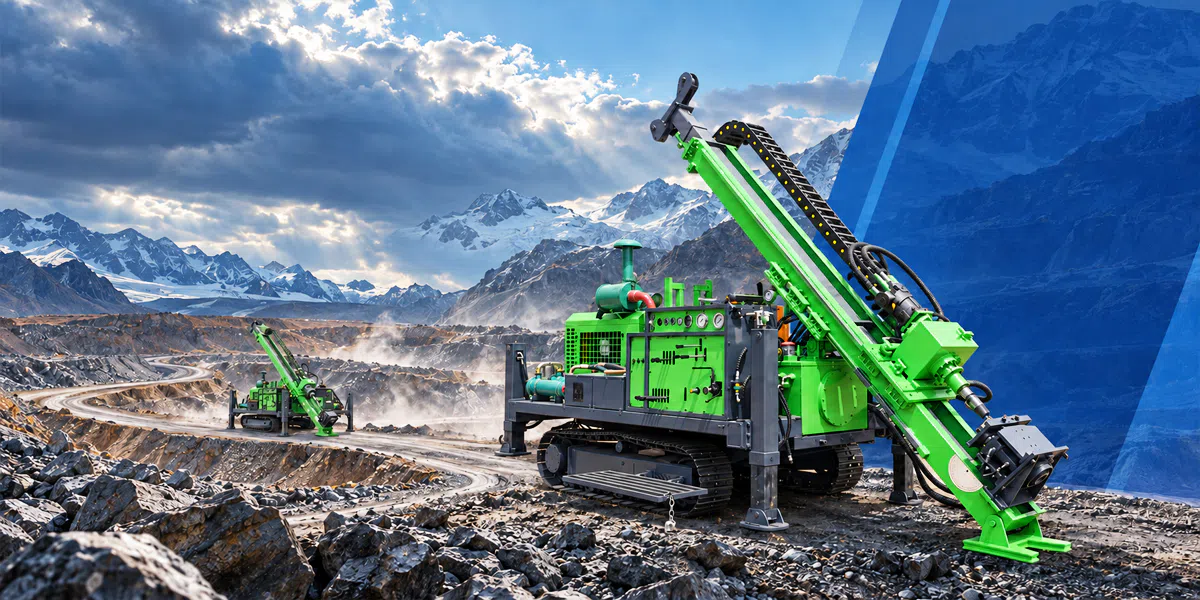
How Does a Fully Hydraulic Wireline Core Drilling Rig Work?
The operating principle combines three integrated systems:
1. Hydraulic Power Transmission
An electric or diesel engine drives hydraulic pumps that pressurize hydraulic oil. This pressurized fluid is routed through control valves to the main spindle (rotary head), feed cylinder, and winch — providing infinitely variable speed and torque adjustment without mechanical gear changes.
2. Wireline Core Retrieval System
Instead of pulling the entire drill string to surface every time a core barrel is full, the wireline system uses an overshot tool lowered on a wire rope. The inner tube assembly — containing the rock core — is retrieved through the inside of the drill rods while the outer string remains in the borehole. This dramatically reduces trip time and improves operational efficiency.
3. Flushing Circulation System
Drilling fluid (water, mud, or foam) is pumped down through the drill rods, flushes the annulus around the core bit, and carries cuttings and core samples back to surface. The circulation both cools the bit and transports rock cuttings out of the hole.
The retrieved core is then logged, boxed, and analyzed by geological teams to determine lithology, structure, alteration, and mineral resource potential.
---
Key Applications
Mineral Exploration
In mining and exploration projects, the wireline core rig is the industry standard for definition drilling. It provides oriented, high-recovery core that allows geologists to model ore bodies, estimate reserves, and plan mine development — from grassroots prospecting to feasibility-stage drilling.
Geological Survey & Mapping
Government geological surveys and research institutes use these rigs to map subsurface geology, identify fault zones, unconformities, and sedimentary sequences, and produce accurate cross-sections for regional geological maps.
Water Conservancy & Hydrology
For dam foundations, groundwater investigations, and aquifer evaluation, core drilling provides data on rock mass quality, permeability, fracture zones, and groundwater conditions — essential for hydraulic engineering design and slope stability assessment.
Infrastructure & Civil Engineering
Core rigs also serve tunnel investigation, bridge foundation assessment, and site characterization for major infrastructure projects where rock strength and deformation parameters are required.
---
A fully hydraulic wireline core drilling rig remains an indispensable tool in modern geological exploration. Whether your project involves greenfield mineral prospecting, regional geological mapping, or hydrogeological investigation, the ability to retrieve continuous, high-quality core from depth directly determines the reliability of your exploration data.
When selecting a rig, match the depth capacity, terrain mobility, and automation level to your project's specific conditions — and partner with a manufacturer who understands both drilling performance and the practical realities of field operation.


